From hands-on analysis of adult cognitive patterns, spatial recognition difficulties tend to emerge slowly. Many adults adapt without realizing it, relying on shortcuts or avoidance strategies until issues surface in everyday situations like navigation, visual problem-solving, organizing spaces, or interpreting diagrams. This article explores the most common underlying causes, how they show up in real life, and why spatial recognition challenges in adults are frequently misunderstood or incorrectly attributed to other cognitive issues.
Quick Answers
What is spatial recognition?
Spatial recognition is the mental ability to identify, remember, and mentally organize objects, patterns, and relationships in space. It affects how adults navigate environments, interpret visual information, and solve problems that require spatial thinking—often before any physical movement occurs.
From a practical perspective, spatial recognition weakens when it’s underused and improves most when it’s trained intentionally through visualization, pattern recognition, and mental mapping rather than general coordination exercises.
Top Takeaways
Poor spatial recognition has multiple causes
It’s usually a combination of habits, environment, and skill neglect.Technology plays a major role
Heavy reliance on automation can weaken spatial processing over time.Spatial recognition declines without use
Like any cognitive skill, it degrades when undertrained.The issue is often misidentified
Many adults blame attention or memory when the root cause is spatial.Improvement is possible at any age
Once the cause is clear, progress accelerates.
Common Causes of Poor Spatial Recognition in Adults
Poor spatial recognition rarely appears overnight. It develops gradually as certain cognitive systems are used less frequently or inefficiently.
One of the most common causes is underuse. Adults who rely heavily on step-by-step instructions, digital navigation tools, or automated systems often stop forming internal spatial maps. Over time, the brain offloads spatial processing rather than strengthening it.
Another frequent cause is weak visual memory. Spatial recognition depends on remembering layouts, object relationships, and visual patterns. When visual memory isn’t exercised, spatial reasoning becomes slower and less accurate.
Stress and cognitive overload also play a role. Chronic multitasking reduces the brain’s ability to process spatial relationships deeply, leading to shallow visual encoding rather than meaningful spatial understanding, an issue often compounded when speed reading prioritizes pace over deeper visual and spatial processing.
How Technology Contributes to Spatial Decline
Modern tools are helpful—but they can unintentionally weaken spatial recognition.
GPS navigation, for example, removes the need to visualize routes, landmarks, or distances. Over time, adults may lose confidence in navigating independently, even in familiar environments.
Similarly, constant screen-based interaction reduces exposure to real-world spatial challenges. Physical environments provide depth, scale, and movement cues that flat digital interfaces do not.
From observation, adults who regain spatial confidence often do so by reintroducing spatial decision-making, not by consuming more information.
Why Poor Spatial Recognition Is Often Misdiagnosed
Adults with spatial recognition challenges are frequently told they have:
Poor memory
Attention issues
Low confidence
Lack of focus
In reality, many of these symptoms stem from difficulty recognizing and organizing spatial information mentally.
For example, someone who struggles to assemble furniture may assume they are “bad at instructions,” when the underlying issue is difficulty visualizing object relationships. Without identifying spatial recognition as the cause, improvement efforts miss the mark, limiting opportunities to increase brain power through targeted spatial training.
“Most adults with poor spatial recognition aren’t missing ability—they’re missing exposure. When spatial skills go unused, the brain adapts by relying on shortcuts instead of internal maps.”
Essential Resources on Spatial Recognition
1. Understanding Spatial Cognition in Adults
ScienceDirect – Spatial Cognition Overview
https://www.sciencedirect.com/topics/psychology/spatial-cognition
Explains how spatial recognition functions in the adult brain and how it changes with use, stress, and experience.
2. How Spatial Skills Develop and Decline
Open Encyclopedia of Cognitive Science
https://oecs.mit.edu/pub/or750iar
Breaks down how spatial abilities are formed and why they weaken without intentional engagement.
3. Adult Spatial Cognition Research
APA – Handbook of Spatial Cognition
https://www.apa.org/pubs/books/4318108
Provides authoritative insight into spatial reasoning across the lifespan.
4. Internal Mapping and Navigation
Springer Encyclopedia – Spatial Cognition
https://link.springer.com/rwe/10.1007/978-3-031-25900-5_117-1
Explains how internal spatial maps degrade when unused.
5. Visual-Spatial Processing Studies
Frontiers in Psychology
https://www.frontiersin.org/research-topics/61096/highlights-in-cognition-visual-spatial-processing/overview
Connects visual processing efficiency with spatial recognition performance.
6. Visual Memory and Spatial Skills
Wikipedia – Visuospatial Function
https://en.wikipedia.org/wiki/Visuospatial_function
Clarifies the link between visual memory and spatial reasoning.
7. Navigation and Spatial Confidence
Wikipedia – Sense of Direction
https://en.wikipedia.org/wiki/Sense_of_direction
Explains why adults lose navigation confidence over time.
Supporting Statistics
Research shows that spatial recognition challenges are common, measurable, and reversible
Studies in spatial cognition research demonstrate that spatial abilities respond strongly to targeted training.
Spatial skills decline when not actively used, similar to other cognitive abilities
Cognitive science research on visuospatial function shows that underused spatial systems weaken over time.Nearly 1 in 4 U.S. jobs rely on spatial reasoning, especially in technical fields
According to the National Science Foundation STEM workforce data, spatial reasoning is critical across engineering, technology, and applied sciences.Studies show targeted spatial training improves performance even in adulthood
Adult-focused spatial skills training studies report significant gains from short, intentional interventions.Short, focused spatial training outperforms general mental exercises
Research in cognitive training effectiveness confirms that skill-specific training leads to better transfer and retention than broad brain games.
Research consistently shows that spatial recognition is a measurable, reversible skill tied to real-world performance and career readiness, an insight that private schools often apply by prioritizing targeted spatial training and long-term cognitive development.
Final Thought
Poor spatial recognition in adults is rarely a failure of ability. It’s usually the result of how modern life reduces the need to think spatially.
When adults stop visualizing, navigating, and manipulating space mentally, the brain adapts by outsourcing those tasks. The good news is that the same adaptability allows spatial recognition to rebound quickly when re-engaged.
The most important shift isn’t effort—it’s awareness. Once adults understand why spatial recognition declined, improvement becomes intentional instead of frustrating.
Next Steps
Identify the Likely Cause
Heavy GPS reliance
Low visual memory use
Minimal spatial problem-solving
High cognitive overload
Reintroduce Spatial Challenges
Navigate without GPS
Visualize routes before moving
Reconstruct layouts from memory
Track Progress
Time tasks
Measure accuracy
Repeat weekly
Adjust Intentionally
Reduce difficulty if needed
Increase complexity gradually
Stay consistent
By identifying the true cause, reintroducing spatial challenges, and tracking progress intentionally, reading to improve your brain's processing speed can support clearer visual memory, faster spatial recognition, and more efficient problem-solving as these skills are strengthened over time.
FAQ on Spatial Recognition
Q: What does spatial recognition involve?
A:
Identifying objects and patterns
Remembering spatial layouts
Organizing space mentally
Visualizing how things fit together
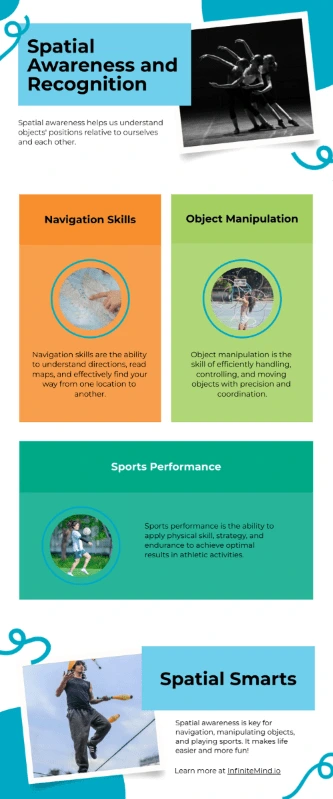
Q: Why is spatial recognition confused with spatial awareness?
A:
They look similar in daily tasks
They use different cognitive systems
Mental spatial issues are often mistaken for movement problems
Q: How can you tell if spatial recognition is weak?
A:
Trouble reading maps or diagrams
Difficulty assembling objects
Problems judging distance or layout
Q: Is spatial recognition fixed in adults?
A:
No, it is trainable
Adults improve with targeted practice
Visualization and spatial problem-solving work best
Q: Who should focus on improving spatial recognition?
A:
Adults who struggle with navigation
People with visual reasoning challenges
Anyone who finds spatial organization difficult
Poor spatial recognition in adults is often influenced not only by cognitive limitations but also by behavioral patterns that quietly interfere with improvement. Many people avoid spatially demanding tasks, over-rely on tools like GPS, or disengage when frustration appears, which reinforces weak spatial recognition over time. This pattern closely mirrors the dynamics explained in self-sabotage, where avoidance, negative habits, and misdirected effort prevent meaningful progress. In the context of spatial recognition, self-sabotage often shows up as giving up on visual challenges, assuming a fixed limitation, or training the wrong skill altogether. Addressing these behavioral barriers is a key step in understanding what causes poor spatial recognition in adults and how it can be effectively improved.